How do I switch an auction from timed to live in BidWrangler?
Timed-to-live auctions in BidWrangler allow for bids to be placed competitively before your live auction event, then that auction transitions to a live auction at the specified time. Both online and in-person bidding is available during your live auction.
Note: If you have never run a timed-to-live auction in BidWrangler before, please contact helpdesk@bidwrangler.com to schedule a training, this will cover the setup, clerking, and checkout on the day.
Which Settings Control the Auction Going from Timed to Live?
Three time fields on the auction determine how the timed-to-live transition behaves:
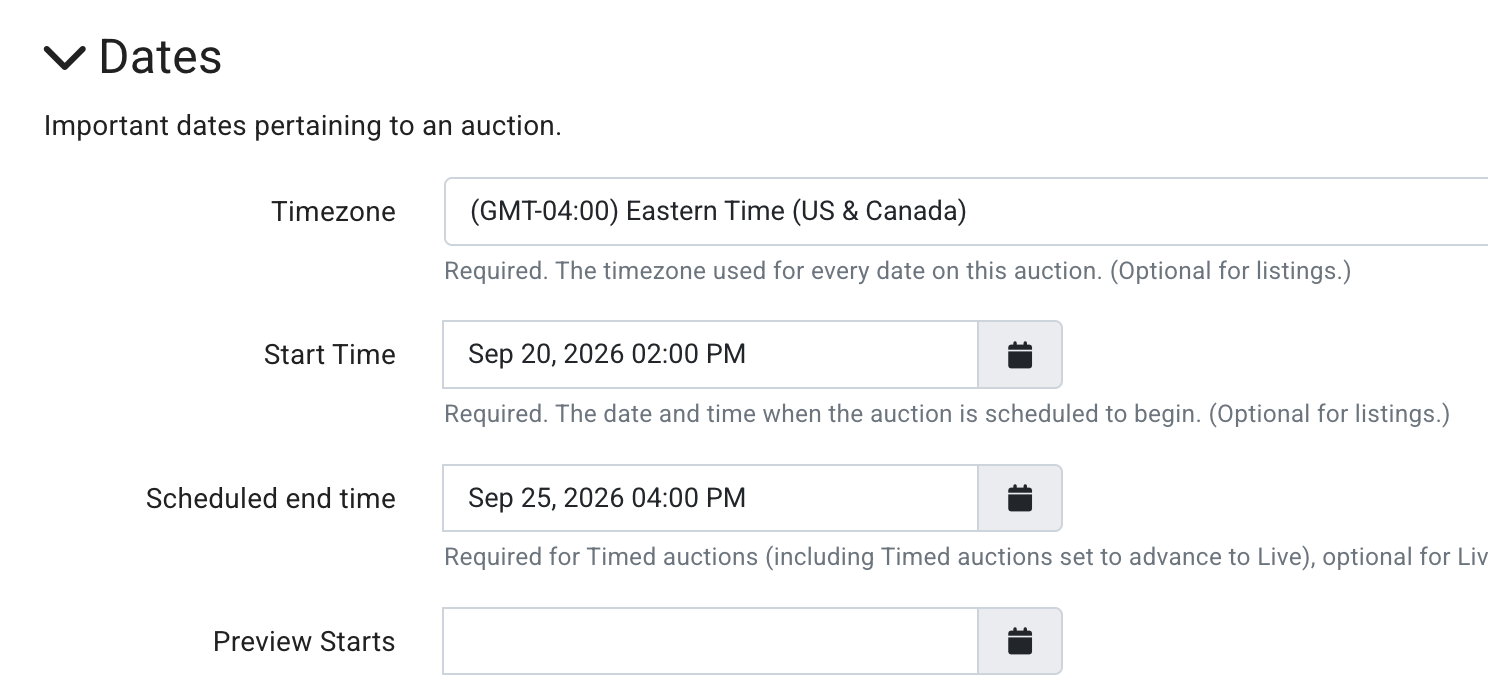
Dates
Timezone: associates a timezone to the auction and its starting times. Confirm this first, since every other time on the auction is interpreted in this timezone.
Start Time: the scheduled starting date and time for the auction. This is when the timed (online only) phase opens for bidding.
Scheduled End Time: when the timed phase of the auction concludes. In a standard timed auction this is when items begin closing. In a timed-to-live auction, the timed portion counts down to this point and then items pause instead of selling, so the sale can continue live.
The live phase does not start automatically at a clock time. After the timed portion pauses, live bidding begins when your clerk opens the first lot with Manage Item and clicks Start Auction. Plan your advertised live start time accordingly: set the Scheduled End Time to when you want timed bidding to stop, and have your clerk ready to start the live sale from the clerking panel at your announced start time.
In the example below, the auction is accepting competitive bidding from the Start Time, and transitions to a live auction at the Scheduled end time - Sept 25, 2026 at 4:00 PM Eastern:
Timed Auction
Timed Auction? Indicates to the system that this auction will include an online-only portion.
Becomes Live Auction? Indicates to the system that this auction will transition to a live auction.
Both these options need to be checked:
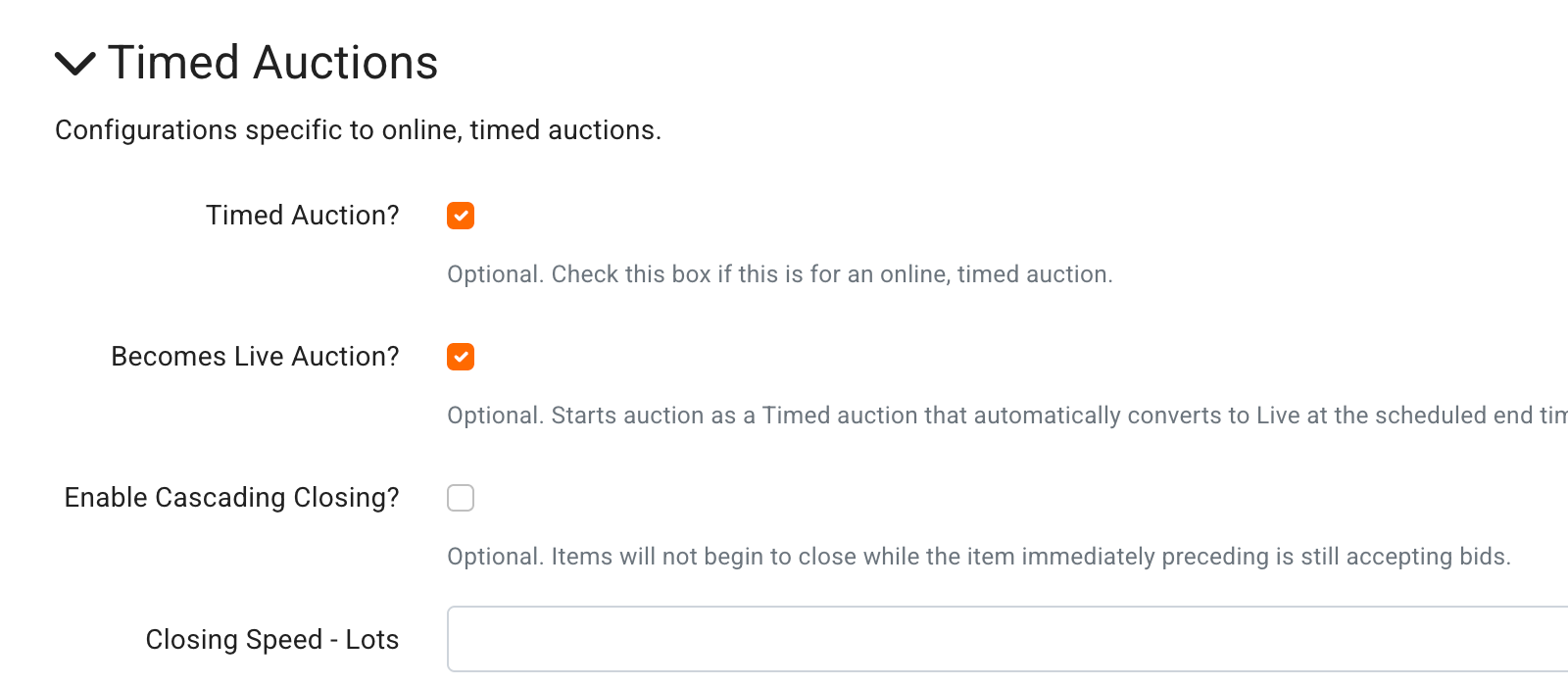
Since closing the auction will be handled manually, there's no need to enter values for closing speed - lots, seconds, or auto-extend, etc. This will all be managed by the live clerk.
Note that once the auction transitions to live, these settings will update automatically - you do not need to edit any settings in your auction on the day of the sale. Once the system converts the auction to live, the scheduled end time will become the start time, and the scheduled end time remains blank (there's no scheduled ending anymore). Further, the Timed Auction? box will also be un-checked, since it's no longer online only.
Starting the Auction
When the live auction is ready to begin, navigate to the clerking panel via the bidding paltform.
When the auction transitions from timed to live your online bid schedule will convert to the online operator panel, and a live increments table will display with Bid and Ask buttons next to each increment.
All of the items will change to pending, but to start the auction, click the Start button next to the first item. This item is now the active item, and you can record in-person bids, and accept incoming online bids.
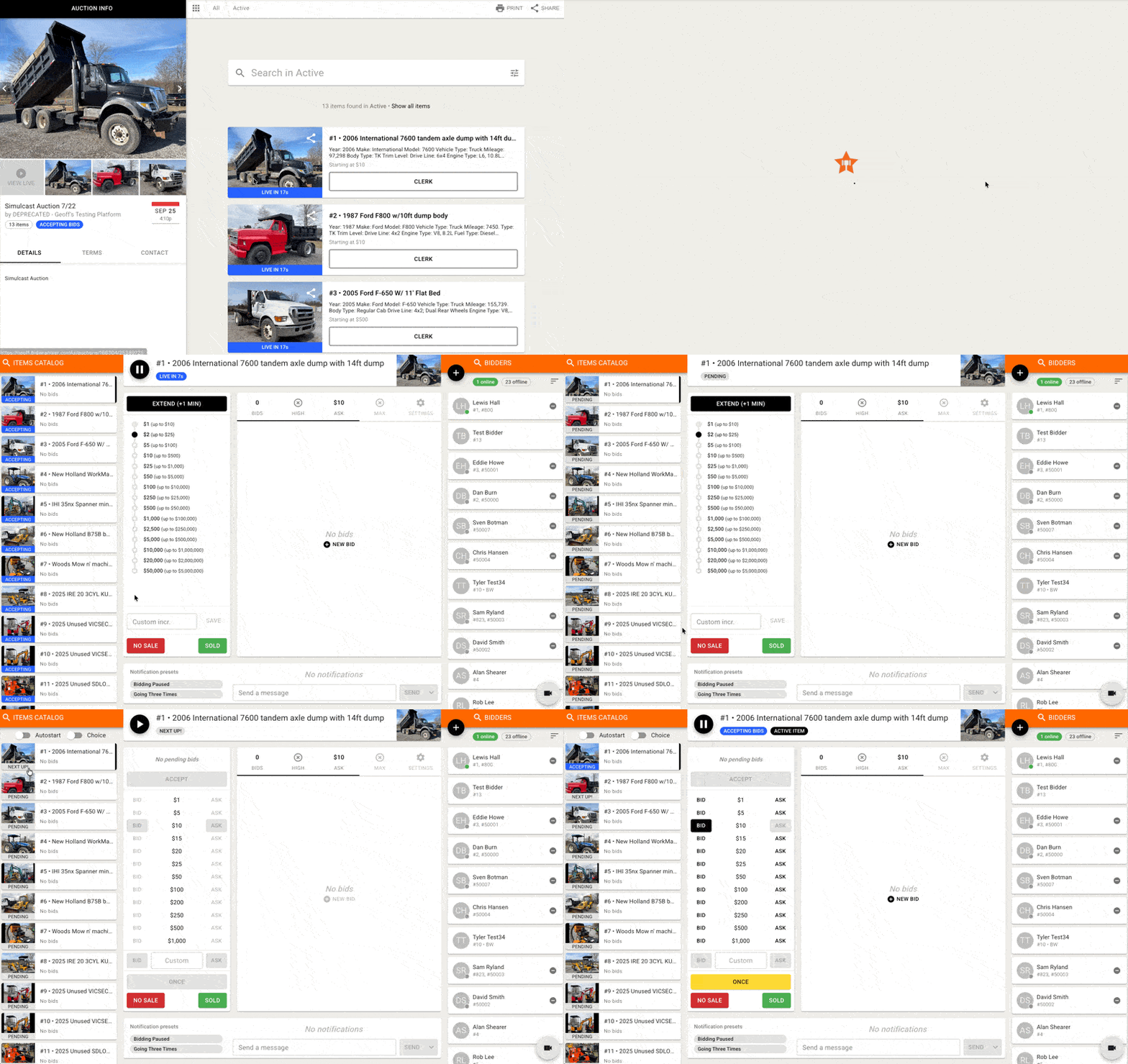
During the live phase, your preset bidding increments do not control the sale. The clerk sets the asking price in real time from the Online Clerking Panel, where you can select an increment for the asking price or enter your own amount to match what the auctioneer is calling. The high bids carried over from the timed phase remain in place, and the clerk simply sets the next ask above them.
Bidders Perspective
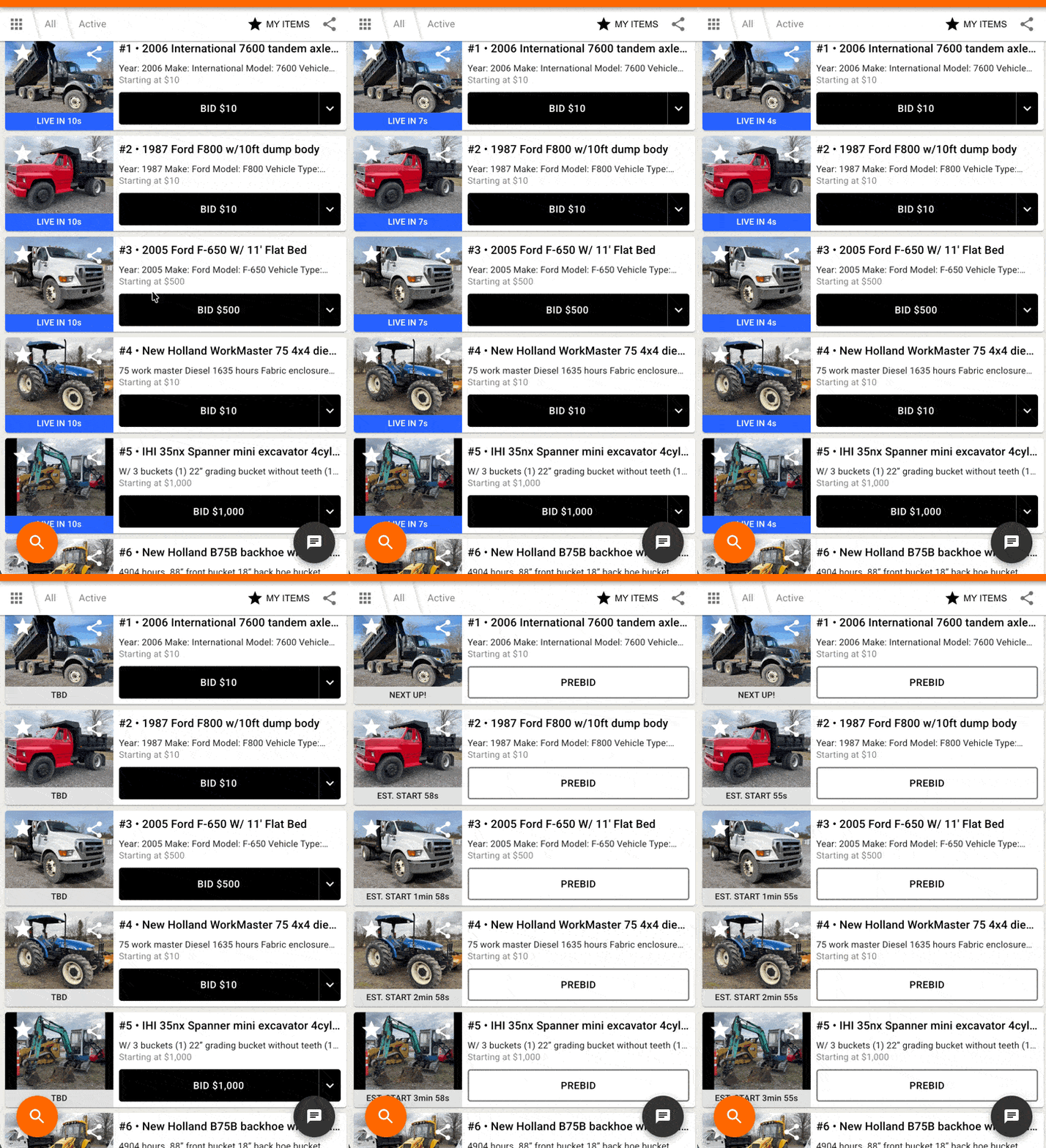
As the auction counts down to the scheduled end time, items will display a countdown clock. Competitive bidding is still available on all items up until the auction transitions to live. At which point, the items will display 'NEXT UP' on the first item, and an Estimated Start time on the other items. The bid button will convert to 'PREBID' which allows bidders to place Maxbids on items, but they will not compete in the auction until that item is clerked.
Once the auction begins, one item is available for bidding at a a time this is considered the Active Item. The active item stays locked to the top of the catalog so bidders can continue to browse without losing track of the active item.